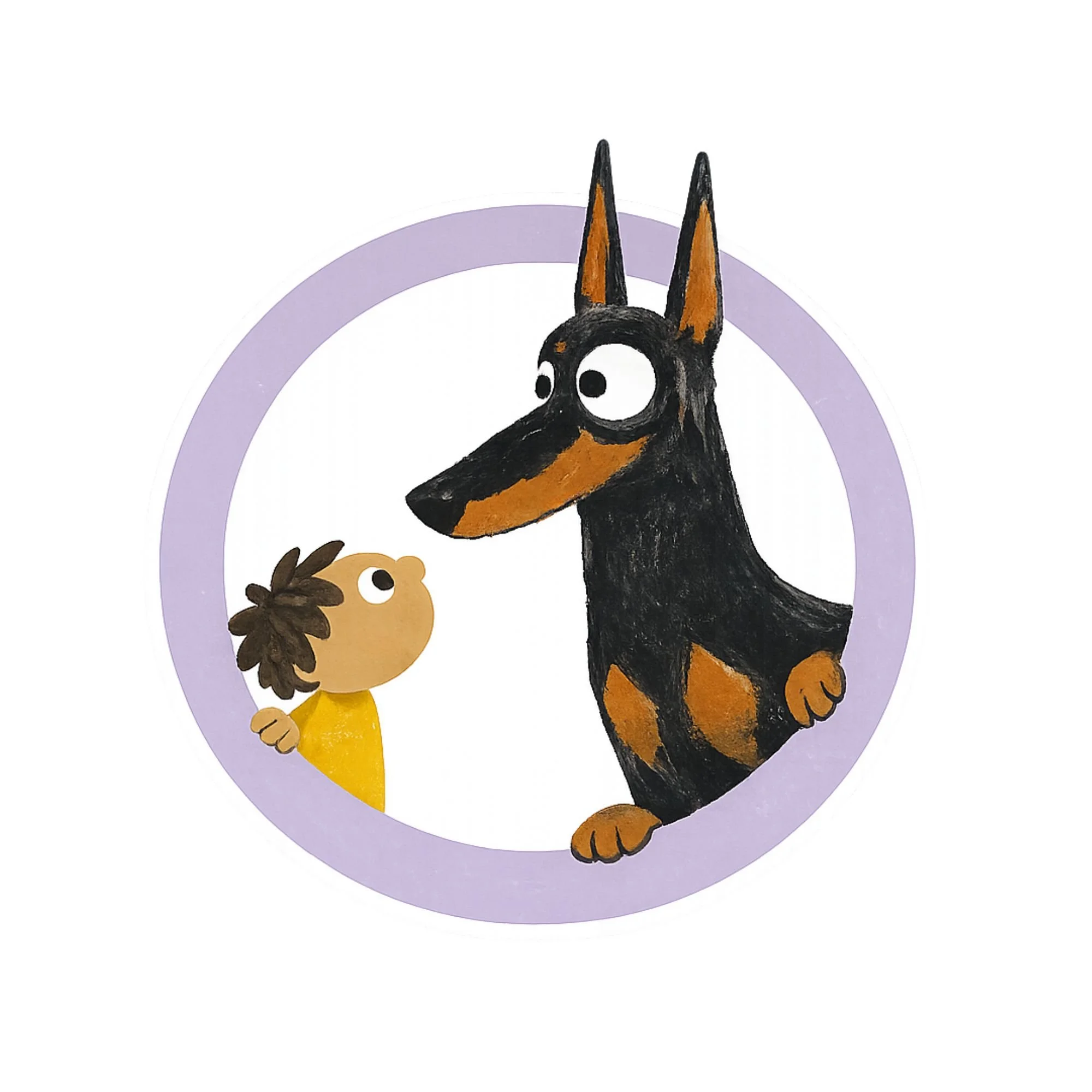
Five Ways Children Can Help Raise a Doberman Puppy
‘Believe in Magic’ Animated Mixed Media Collage by ©Studio4Null4
A child sees a Doberman puppy and generally wants to join whatever the dog is doing, which can be a quite magical experience. Suddenly, there seems to be a whole secret life that follows the puppy from room to room and unfolds in front of the child’s eyes:
silver-bowl dinners eaten like a pirate, trips around the world that start beyond a locked gate, speed games invented after discovering a curious object, naps where twitchy paws run through invisible fields, and the front-window watch, where mischievous squirrels, bicycle monsters, mysterious neighbors, sad weather, and the peculiar republic of ants pass under Doberman inspection.
The enthusiasm for living life together is already there and the ‘Doberman Five’, our list of five ways children can help raise a Doberman puppy, keeps your kid’s efforts to join the fun useful directions that also make living with a Doberman safer and easier for everyone involved over time:
Fill the bowl.
Let them sleep.
Toss the treat.
Grown-up near.
Give them space.
These jobs work with puppies, adults, adopted Dobermans, and old dogs who have been part of the family longer than your child has. However, introducing these jobs during puppyhood is smart because catching your child’s early eagerness to be part of your new arrival’s life makes it more likely for them to practice and develop a routine.
Kids: Sing Doberman Five!
As part of our ‘Doberman Kids Club’ efforts to help keep your child safe, interested and engaged, we have also created the song ‘The Doberman Five’, which introduces your kid to the five jobs in an age-appropriate and accessible way.

©ADW
-
How many ways can we care for our Doberman?
FIVE!
Count them with your Doberman. Ready?
Everyone, GO![Verse 1]
Number one, the race is done,
Rust-red feet have had their fun.
Check the bowl and fill it right,
Cool, clean water, fresh and bright.Children: One is done! Here comes two!
[Verse 2]
Number two, the house goes slow,
Long black puppy folds down low.
No nose boops, no tapping toes,
Tiptoe past and let them doze.Twitching paws.
Wiggly nose.
Sleeping Doberman.
Let them doze.Children. Softly! Two is done. Here comes three.
[Verse 3]
Number three, give hugs a miss,
No face squeeze and no big kiss.
Toss a treat and watch it fly,
Let your Doberman come nearby.Three is done! Here comes four!
[Verse 4]
Number four, before you start,
Find a grown-up, play it smart.
Meals and games and leash-time too,
Calm and slow is what we do.Step by step.
Slow and clear.
Doberman puppy.
Grown-up near.Four is done! One thing more!
[Verse 5]
Number five, read the face,
Ears and eyes may ask for space.
If your puppy turns away...Take one step back.
That’s the way.
Number one?
FILL THE BOWL!Number two?
LET THEM SLEEP!Number three?
TOSS THE TREAT!Number four?
GROWN-UP NEAR!Number five?
GIVE THEM SPACE!
[Final chorus]
Doberman Five! Doberman Five!
Long legs, bright eyes, side by side.
Fill, tiptoe, toss, slow pace,
Grown-up near and give them space.Doberman Five! Doberman Five!
Count them out from one to five.
Kind hands, quick feet, clever eyes,
That’s our brilliant Doberman Five![Fast final chant]
One! Fill!
Two! Tiptoe!
Three! Toss!
Four! Grown-up!
Five! Give space!Everyone, DOBERMAN FIVE!
Parents: Help Them Understand The Song Fully
1. Fill the bowl
Checking the water bowl teaches a child to notice one of the puppy’s basic needs. However, the adult is still in charge of making sure the Doberman pup always has clean, fresh water.
Relying on a child’s developing memory to keep the puppy hydrated is rather like appointing the family hamster head of municipal water services. It has excellent fairy-tale potential, though the kingdom may soon require a rescue party with a full pitcher.
Teach it together
Stand beside the bowl and ask:
“Can you help me? What do you see?”
Help the child describe the water as full, low, empty, or dirty. To learn this task, we bribed Petite Giacomo with cookies to visually teach this task:
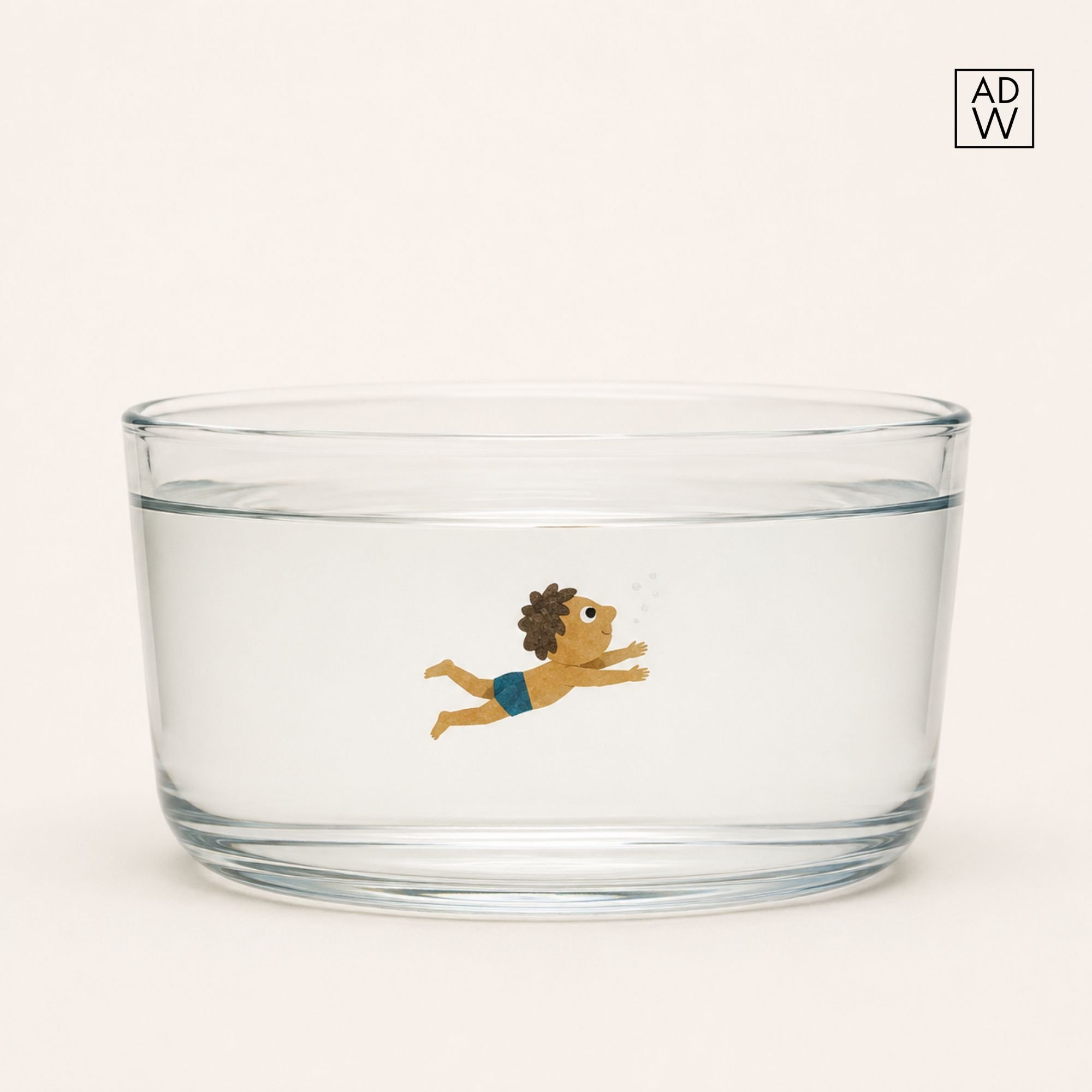
The Bowl is Full.

The Water Is Low.

The Bowl Is Empty.
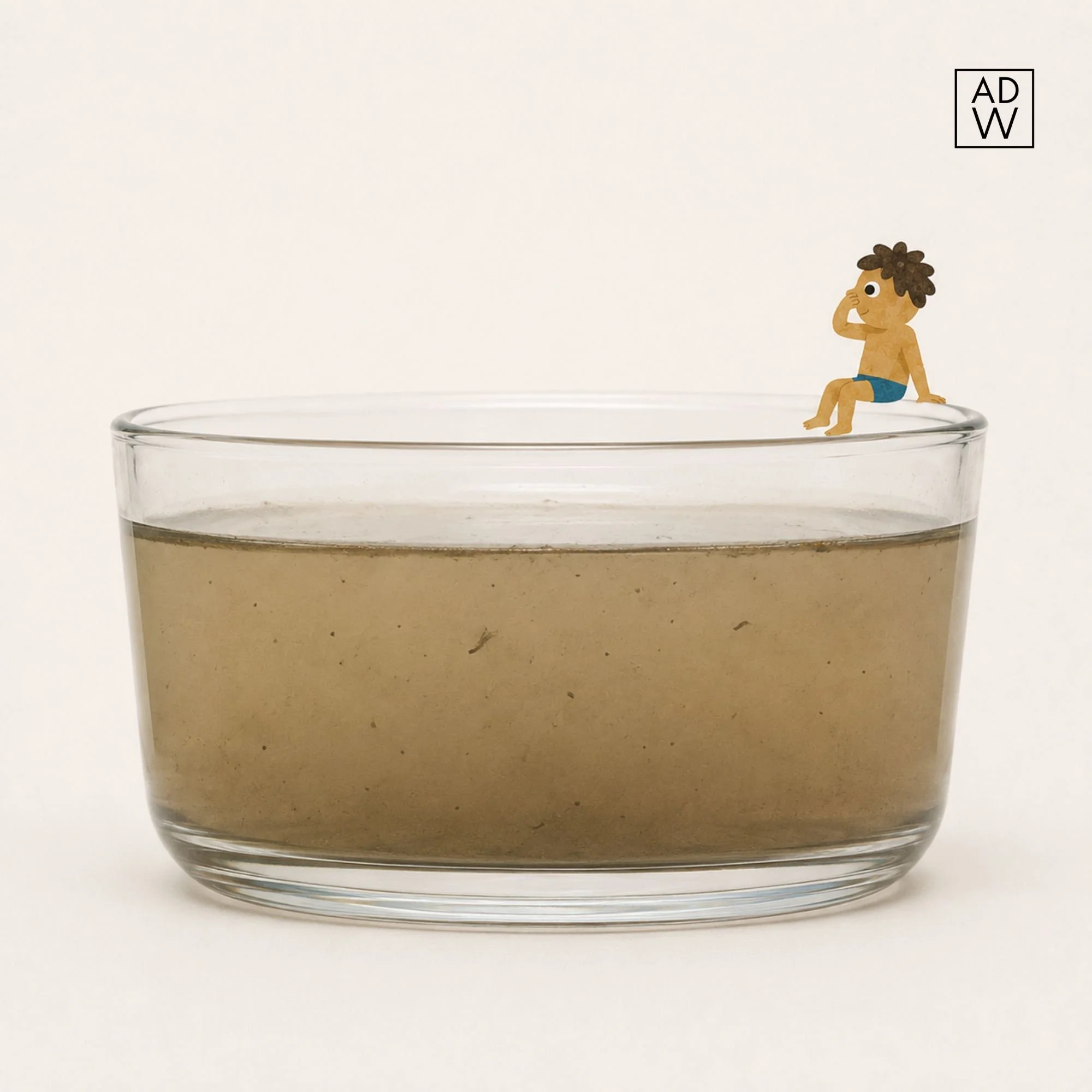
The Water Is Dirty.
Illustrations: Studio4Null4 ©ADW
At first, reporting is the entire job. Once the child is ready, the parent can invite them to help pour while the Doberman puppy waits elsewhere to avoid surprise showers.
Keep the lesson brief. One check at breakfast or after outdoor play is enough.
By age
Ages 3 to 5: Point to the bowl and name what they see.
Ages 6 to 8: Check the bowl and report to the adult. Help pour when invited.
Ages 9 and up: Rinse and refill as an assigned job, with an adult still checking that it was done.
Club words
Full, low, dirty or bright?
Check the water. Make it right.
Praise the noticing with a high five and:
“You saw that the bowl was low and told me.”
That is more useful than a floating “good job,” which asks the child to reverse-engineer the compliment.
2. Let them sleep
A sleeping Doberman can be extremely difficult for a child to leave untouched. There are folded paws, a little fizzle of tape sticking out on ears, and sometimes a small dream gallop that can either look scary, funny, or adventurous enough to wake the puppy and ask where it has been and if it is okay. Still, sleeping dogs, including puppies, need to be left alone on their dream adventures. Both the CDC and AVMA advise children not to disturb dogs while they are sleeping or eating.
Teach it together
Use one phrase every time:
“Sleeping Doberman, quiet feet.”
Show the child what that means. Lower your voice. Walk around the puppy rather than over them. Move noisy play somewhere else.
Practice when the Doberman is awake or in another room. Children can tiptoe past a stuffed dog, spot pretend sleepers in an illustration, like the one below, or freeze when the parent whispers, “Quiet feet” as part of a game.
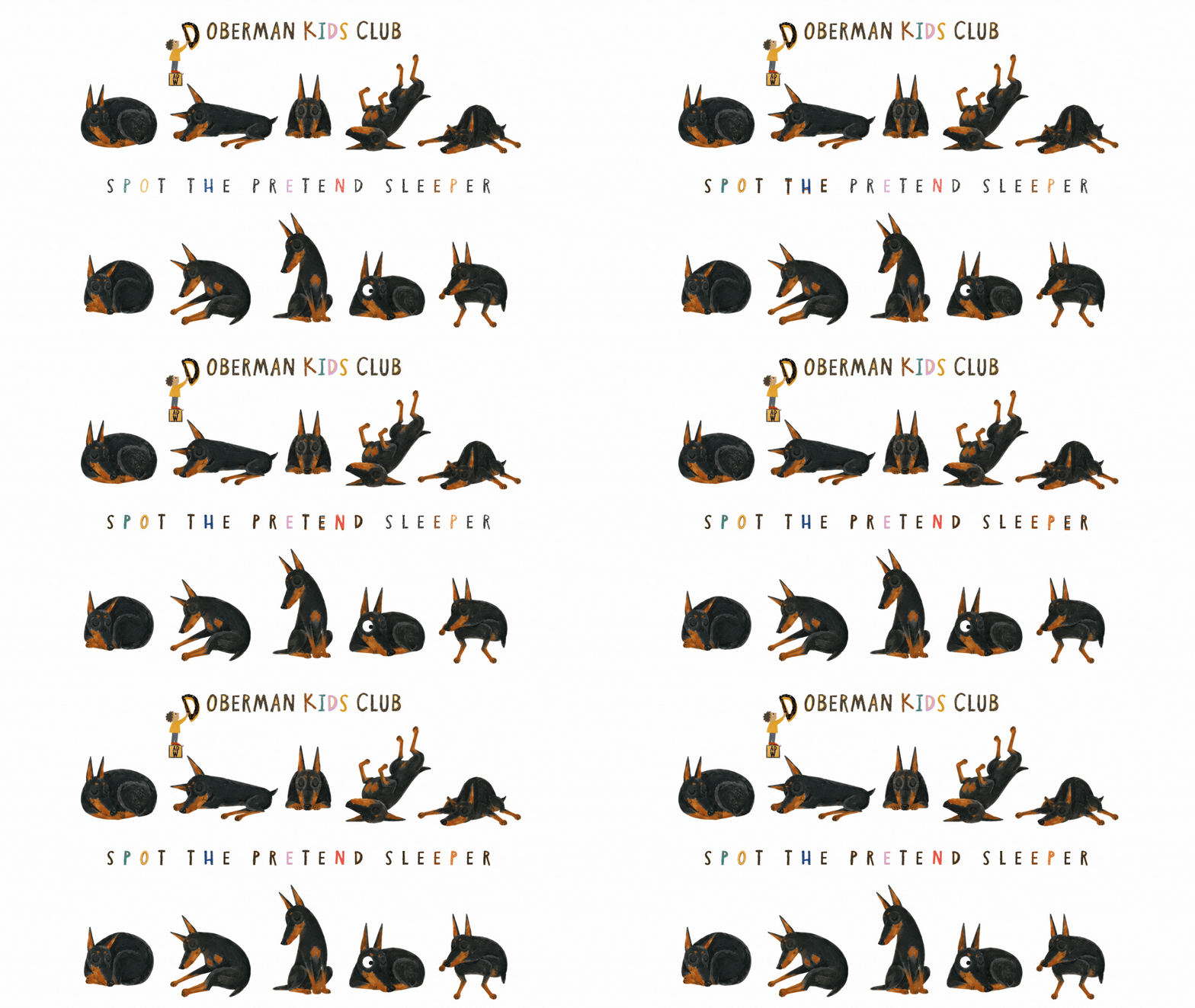
‘Spot The Pretend Sleeper’ with Giovanni Battista Tocci. Illustration: Studio4Null4 ©ADW
By age
Ages 3 to 5: Copy the adult’s quiet walk.
Ages 6 to 8: Look before approaching and decide whether the Doberman is asleep.
Ages 9 and up: Notice when the dog has settled and move their own activity away without waiting for a reminder.
Club words
Twitching paws and wiggling nose.
Sleeping Doberman. Let them doze.
Praise the decision with a high five and a simple:
“You saw her sleeping and took the other way.”
Walking past can be a real job. It requires the child to notice, remember, and resist one particularly inviting ear.
3. Toss the treat
Children often try to show affection by leaning in, wrapping their arms around the dog, or bringing their face close to give kisses. Even a family dog may dislike being hugged, and dog-safety guidance recommends keeping children’s faces away from a dog’s mouth.
A treat toss gives the child something enjoyable to do while leaving room around the Doberman. To avoid overfeeding and tummy troubles ending in an argument with the rug at 3 o’clock in the morning, set aside some of the puppy’s daily, regular food ration as treats.
Teach it together
The adult chooses the treat amount and the setting.
Show the child where to stand.
Toss the treat away from the child’s body.
Keep hands still while the Doberman finds it.
Wait to see what the dog does next.
Don’t let the child chase after the Doberman or immediately throw another. The pause belongs to the game.
By age
Ages 3 to 5: Count or say “find it” while the adult tosses. Some children may toss from behind a gate with the adult beside them.
Ages 6 to 8: Toss one treat from an agreed spot and wait.
Ages 9 and up: Join a short supervised search game prepared by the adult.
Skip the game when several dogs are gathered, the Doberman is eating or chewing, or excitement is already running through the room at zoomie speed.
Club words
Skip the squeeze. Let treats fly.
Toss one gently, then stand by.
Praise the space the child created:
“You tossed the treat and waited with your hands still” and then high five.
4. Grown-up near
This job teaches children to recognize the moments that begin with an adult.
Parents guide all five Doberman lessons. Grown-up near gives the child a memorable name for the routines where the adult must be physically present and involved before anything starts.
Meals. Leash walks. Doors and gates. Getting into the car. Grooming. Visitors arriving. Games involving food or toys.
Turn recognition into a game
Begin with three situations your family encounters often. Point out the clue by performing the situation and ask:
“What kind of moment is this?”
The leash comes down from its hook.
“Grown-up near.”
The food bowl appears.
“Grown-up near.”
The doorbell rings.
“Grown-up near.”
Once the child knows the pattern, pause and let them identify the moment without help.
The child then completes three steps:
Spot the clue.
Say, “Grown-up near.”
Wait for the adult before joining.
Afterward, the parent gives the child an age-appropriate part in the routine. They might help measure dinner, bring the leash when asked, stand in the family’s waiting place by the door, or join a game once the adult has set it up.
By age
Ages 3 to 5: Learn simple pairings: “Bowl means grown-up. Leash means grown-up.”
Ages 6 to 8: Identify familiar situations and say the Club words.
Ages 9 and up: Recognize less obvious moments, such as play becoming faster, several dogs gathering, or the Doberman behaving differently.
Club words
Meal or walk or game begins?
Grown-up near before you join in.
Praise the recognition:
“You saw the leash and waited for me before the walk” and then give the child a hug or any other form of affection your child is comfortable with.
The child has done more than stand nearby. They noticed the beginning of a shared routine and knew how the family handles it.
5. Give them space
Children do not need to become tiny canine-body-language experts. They do need one dependable response when the Doberman moves away, becomes uncomfortable, or no longer wants the interaction.
Stop. Step back. Tell a grown-up.
Young children may misread canine signals, particularly subtle signs of discomfort, particularly under the age of 6. Research also shows that structured teaching can improve how children recognize and interpret those signals.
Teach it away from the puppy first
Use pictures, short videos, story scenes, provided below, or a stuffed Doberman.

Petite Giacomo and Giovanni Battista Tocci Teach Doberman Safety. Illustrations:Studio4Null4 ©ADW
Ask:
“Did the Doberman come closer or move away?”
“Did the body stay loose or become still?”
“Where should the child step?”
Begin with a few clear signs:
turning the head or body away
walking off or hiding
becoming suddenly still or stiff
growling or showing teeth
The child does not have to decide exactly what the dog feels. The child notices the change, creates space, and gets the adult.
By age
Ages 3 to 5: Learn, “Doberman moves away, we stop.”
Ages 6 to 8: Practice stopping and taking one full step back.
Ages 9 and up: Describe what changed and tell the adult what happened just before it.
Club words
Turning away? Stop the chase.
Step back gently. Give them space.
Praise the response:
“You saw him turn away and stopped. High five!”
Keep the five alive
Parents do not need to teach the whole song in one afternoon. Choose one job and let the child find it in ordinary life.
A few things make the lessons easier to remember:
Use the same Club words each time.
Show the action before asking the child to perform it.
Practice difficult movements away from sharky tooth, a.k.a. the live puppy.
Give one instruction at a time.
Praise the exact thing the child noticed or did.
Consistent cues help children know what comes next, while specific praise makes the successful behavior easier to repeat.
Ultimately, the amazing part happens quietly. The child notices the empty bowl, small feet change direction beside a sleeping Doberman, arms that once reached for a hug send a treat across the floor instead. The leash appears ‘suddenly’ where it always sits, and the petite human remembers to call for a grown-up.
One day, they may do all five jobs without the song, but until then, there is a chorus.
Further Reading for Parents
Activities Guide: Enhancing and Practicing Executive Function Skills
Age-based games and activities from Harvard’s Center on the Developing Child, covering attention, self-control, memory, and gradually increasing independence.
CDC: Tips for Creating Structure and Rules
Practical guidance on short rules, predictable routines, repetition, and consistency among caregivers.
CDC: Dogs, Healthy Pets, Healthy People
Family dog-safety guidance, including supervision and leaving dogs alone while they sleep, eat, hide, or seek distance.
American Veterinary Medical Association: Dog Bite Prevention
Background for parents on sleeping dogs, close face contact, hugging, supervision, and allowing a dog to leave an interaction.
Teaching Children and Parents to Understand Dog Signaling
A peer-reviewed study examining whether structured education improves recognition of canine distress signals.
Can Children of Different Ages Recognize Dog Communication Signals?
Research comparing children from ages four through twelve, with useful context for adjusting expectations and supervision by developmental stage.
A Note for Grown-Ups
The Doberman Kids Club is made for children to explore with an attentive adult. Every child and Doberman is different, so choose activities that suit your child’s abilities and your dog’s behavior. Keep their time together actively supervised, allow the Doberman to move away freely, and stop whenever either child or dog becomes uncomfortable. The Doberman Kids Club and its content are educational and do not replace advice from your veterinarian or a qualified behavior professional.